




The open door to service
Since its inception, the Salvation Army has always taken every opportunity to spread the Good News of Salvation wherever
where no one else did, often where it seemed shocking to many people. She has always tried to
to confront the social needs of their time. Hence the great appeal of this year, which in England has awakened the social conscience
which should awaken the masses.
Recently, the position of the English Salvation Army has been heavily attacked. In response, we are publishing here the statement of a minister of the Anglican Church, BBC reporter Rev. John Lambert.
Have they gone too far?
At first it seemed so to me, but now I have witnessed a lesson in public relations given by the Salvation Army to the Church of our country. The venue was the Playboy Club, Park Lane, London; there were press representatives from no less than 26 agencies, representatives of the BBC and TV, in short, just about everything from the Times to the Daily Mirror. Also present were: Miss Monde and the well-known Bunny Girls.
I have to admit that I was initially a little skeptical and averse to this venture. It seemed to me that this time the good old Salvation Army had gone a little too far, because for me playboys and bunny girls were the most extreme thing I could imagine.
The press shared this opinion, as was evident from the pointed questions that were asked. But the journalists were soon won over, not by the Salvation Army officers, nor by the charm of the Bunny Girls, but by the courage that the Salvation Army showed in resorting to this extraordinary method to achieve its goal.
General Booth sent his troops into the pubs, the often disreputable taverns. General Coutts sent them into the clubs. The people who are to be found in these places are always the same, except that today they move around under a veneer of elegance and luxury.
The aim of this press conference was to publicise <


Press sensation - What we say about it
Have they gone too far?
"For a moment, I believed it...>>>
says an Anglican pastor, attached to the BBC
I have just attended a lecture in public relations given by the Salvation Army to the Christian Church in this country. The venue? The Playboy Club, Park Lane, London. Present: the press, with no fewer than 26 agencies, swelled by the BBC and TV; in short, pretty much everything from the Times to the Daily Mirror. Also there: Miss World and, hold on to your hats, the Bunny Girls. And how charming they were, not
only in appearance, but also in personality! I confess to having gone there somewhat indisposed towards this enterprise. It seemed to me that this time, this good old Salvation Army was going too far. The Playboys and the Bunny Girls, for me, were like a last resort.
The press shared this sentiment, for his questions were very sharp; but the journalists were won over, not by the charm of the Salvation officers, nor by that of the Bunny Girls, but by the courage of the Salvation Army to stick to its essential aims and methods. General Booth sent his troops into the
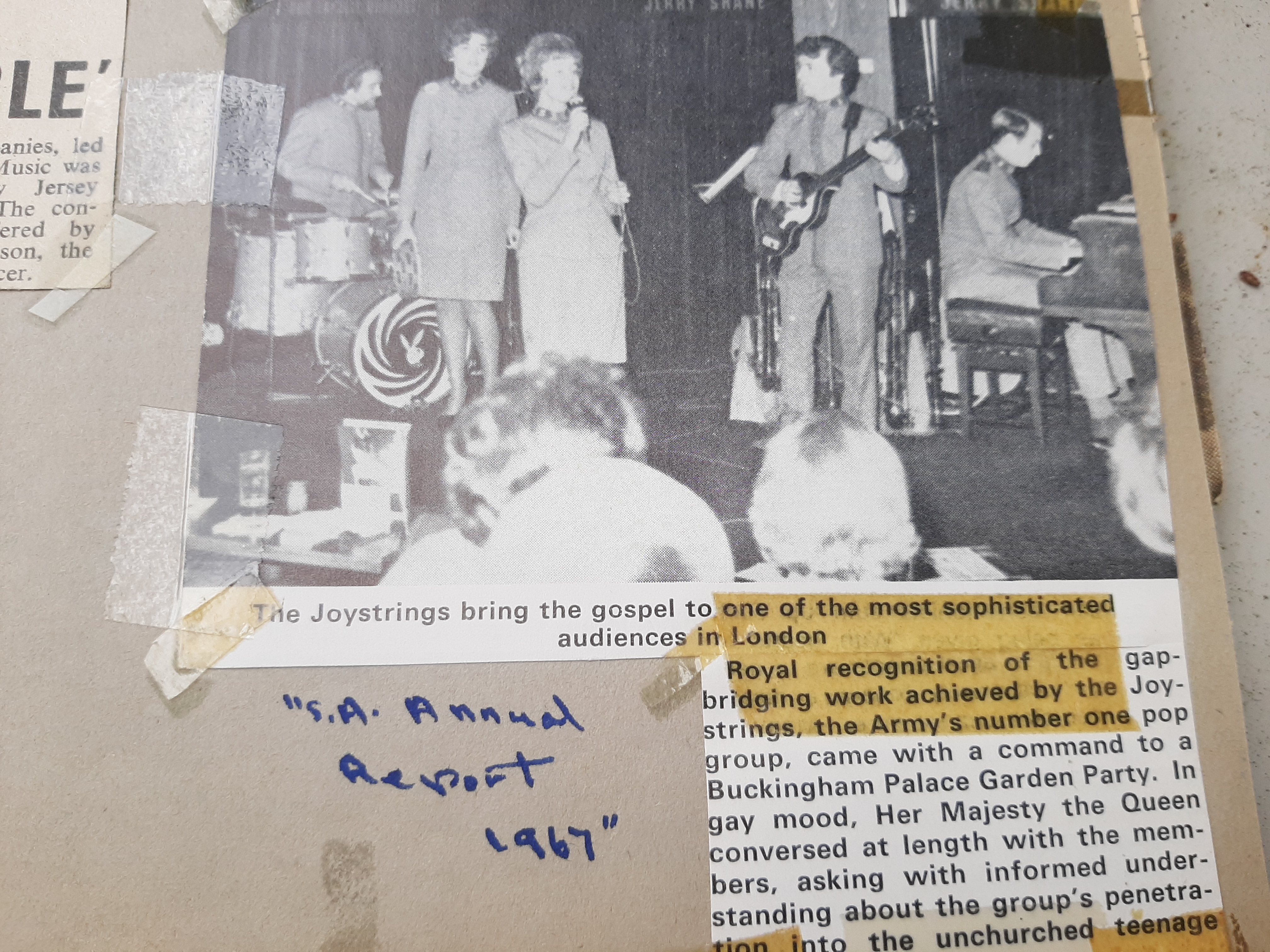
Joystrings among the Playboys
Bet les Bunny Girls
Photo Keystone
To of
This is the most revolutionary thing that has come to us <



It is a half-truth to say that William Booth, the founder of the Salvation Army, was only a reformer; a love pioneer who tackled the injustices of his time and acted as a social advocate. He was first and foremost a preacher who wanted to teach the godless man the way to God. He wrote: "The only hope for a lasting liberation of humanity from the misery of this and that of the world to come is the rebirth of the individual in the power of the Holy Spirit." During this liberation attempt he encountered all kinds of consequences of sin, such as the white slave trade, prostitution, poverty and drunkenness. Based on his faith, he waged a fierce battle and dared to say a clear "no" to these abuses. He believed with all his heart in the renewing power of God and never failed to point this out to people in need. Today things are no different. It may be true that social needs are no longer so dire, but it is equally true that behind the shiny prosperity and gilded luxury there is much spiritual distress and distress. The goal of the salvation soldier now is to persuade people to live in obedience to God and His Word. To be fully human according to God's intention. Now it is also about a choice: For or against Christ, one follower of Jesus or a slave of sin, for eternal life or eternal death. Even now, the Salvation soldier is not primarily a social worker, a reformer or probationer, a youth worker or nurse. No, even now he is first and foremost a messenger of God, who always says in many tones, in many ways, in word and deed: “You must be changed,” or to use a truly Biblical word. : “You must be converted.” Saved ourselves to now save others, that is the "soul" of our work. The Salvation Army offers limitless and exciting opportunities to all young people who really want to help fulfill God's mission in this world. In all corps there are open places for young Christians who really want to testify of their faith and for those who want to serve full-time as salvation officers there is the opportunity to receive training for this. Major C. Nieuwland, the candidate secretary, would like to provide further information. His address is: William Booth nursery school, Amsterdamseweg 285 in Amstelveen.


CONVERSATION WITH JOY WEBB
S
i-
-
On the last day of the tour after a spirited performance for 400 students of the L.T.S. In Leeuwarden we found some time for this interview. J.V.
How did you find this tour? I thought she was very helpful. Not only was there a great reception everywhere, but also a particularly sympathetic audience. It was wonderful to see so many young people making a decision for Christ.
How many records do you have now? Fifteen, including two LPs.
And the total circulation?
Not a clue. There were more than "It's an open secret".
What were the highlights?
How can you ask that? That was of course De Doelen in Rotterdam. It is already an experience to see such a room empty, let alone when it is completely filled.
Was it very tiring?
(With a deep sigh): Oh yes, it was. We had to work hard!
You now have a few Dutch ones
heard combos. How do you find them? I like the Dutch combos. Their style is very different from England. In De Doelen we commented on their play.
Yes, but that was only an underlining of their strengths.
Name a few weak ones?
Oh no, that makes no sense. I believe when you criticize you should only emphasize positive things. There
Which song from your repertoire do you prefer to sing? And why?
That's "It won't always be like this". Vocally it is very interesting, has very good lyrics and is an example of perfect religious pop singing. It hits the nail on the head. Muzi - from a bare perspective, I really like "It is no secret what God can do". It
Organ playing is very interesting in this regard.
How do you feel about the Joystrings ceasing to exist?
I'm glad you asked that, so I can explain it to many people. All five of us are sure that this is the best time to stop. If you wait until everyone says: "Who are the Joystrings again?" then you are wrong. You cannot outlive your fame. We have been able to do pioneering work and see that there are many groups that have taken over our work. It is also very difficult

Was it very tiring? (With a deep sigh): Oh yes, it was. We had to work hard! You've now heard a few Dutch combos. How do you find them? I like the Dutch combos. Their style is very different from England. In De Doelen we commented on their play. Yes, but that was only an underlining of their strengths. Name a few weak ones? Oh no, that makes no sense. I believe when you criticize you should only emphasize positive things. They can benefit from that. What would you say to a group of young Salvationists who want to form a combo? I would first ask: "Why are you going to do it?" That is important. It is wrong to do it just for the music. Of course your music has to be good and you can enjoy it, but we must see it as a means of communication to convey the Message. You must be sure of the truth you are bringing and not lose sight of it. Practically I would say: don't try to do more than you can. Provide the best instruments. It is better to buy two good ones than six of inferior quality. We must have a beautiful sound, not noise. Did you think pop music is on its way out? No, it has changed and keeps coming back in different forms. It is the music that appeals to a certain time. You could call the Negro spirituals of 1900 pop music and they are now available in a different form. The peak of the beat may now be behind us. We now live in the time of ballads. These offer an excellent opportunity to pass on a religious message! It is a perfect medium. ???. From a musical point of view, I really like “It is no secret what God can do”. The organ playing is very interesting in this regard. How do you feel about the Joystrings op. to continue to exist? I'm glad you asked that, so I can make it clear to many people. All five of us are sure that this is the best time to stop. If you wait until everyone says: "Who are the Joystrings again?" then you are wrong. You cannot outlive your fame. We have been able to do pioneering work and see that there are many groups that have taken over our work. It is also very it is difficult to find new creative ideas with a small group of 5 people. After all, Peter is married and Bill is getting married, they now also want a less exciting and hectic life. One more question: why did you become a salvation officer? It's hard to say that in a few words. Let me try. At that time I felt the urge of God, not primarily to serve people, but to commit myself and my life to Him. This feeling has become increasingly stronger. It is a wonderful, priceless experience to discover that God lays His hand on your life and says: You are all Mine. Through God's direct approach you come to serve people. I believe that people's needs should never be your calling. I often hear young people say, "Need is calling me." I then say, "God's hand must be on your life," and if that is the case, you will see that need and do something about it. The beginning of everything must be with God. Then you can be completely devoted to Him. That experience fills my entire life: "I know that I have to be a Salvation Officer and I can now say that I cannot think of any profession that will fulfill your life so much and make it meaningful." J.V.


And now about something that already makes the air thin: the arrival of the Joystrings. The incredibly good "pop" group of the Salvation Army. On May 8 they open their tour in the Netherlands with an evening at Musis Sacrum in Arnhem; on May 9 they play at the Buiten Sociëteit in Deventer; on May 10 in Krasnapolsky in Amsterdam. On May 11 there will be the National event, the big evening, in De Doelen in Rotterdam, preceded in the afternoon by a National Combo Festival in the same hall, where we also expect the Joystrings. The Joystrings will be in The Hague on Sunday, May 12; on May 13 in Tivoli in Utrecht; on May 14 in Groningen and on May 15 they conclude their tour in Leeuwarden; in both cases on site in De Harmonie. No matter how large those halls are, they will sell out quickly. For this reason, it is only urgently recommended that you request reservations of places now. For De Doelen, which is organized by the Youth Department in Amsterdam, the surrounding forces in Rotterdam will have the opportunity to register for tickets. As soon as the price is known (which will be approximately NLG 2.50), you are requested to transfer the relevant amount. The transfers are numbered and the reserved places are allocated in order of receipt. Who reacts quickly


 Billy Graham, after listening to a recording of the Joy Strings, which preceded his own speech on the BBC, declared when he spoke: "This is my favorite group. They are spreading the message of God. If others like this develop and do the same work, I will say: God bless them!"
Pioneers in a "Pop" world
an interview with the Joy Strings
for
le Sunday Companion
Received from the Salvation Army Information Services, we are reproducing the following article in case readers of "War Cry" have not read the latest issue of 27-4-68 which featured the Joy Strings on pages 1, 5 and 8.
A band with a ready-made gimmick, already equipped with the latest equipment, and with TV engagements before they have had time to learn to play the guitar; that is what impresarios dream of in their moments of depression, and that is what the Salvation Army found "three years ago. I say found" because the "Joy Strings" really do seem to come out of nowhere.
A press conference in November 1963 gave birth to "Joy Strings". The newly elected Salvation Army International Chief, General Frederick Coutts, told a crowd of reporters that the Army would wholeheartedly add the guitar to its considerable musical arsenal in order to present the Gospel message in a striking way.
ge ner he rec tte ree ter t. as ite
The immediate reaction of the press was: "Where are those Salvation Army guitar bands?" British TV's "Tonight" programme wanted to present a band on screen. Captain Joy Webb, then a member of the staff of the Army's International Military Academy, was asked to demonstrate, with a small group of cadet officers, the type of music used.
And so the group "Joy Strings" was formed. What did they owe their success to? At first, to the magnificent reputation they received in the press and on television in the early days, Joy told me when I recently met three members of the team. But apart from that, the group really had all the ingredients for success.
The Salvation Army is so well known for its social work, its street-corner bands, and its hallelujah hats. "The Salvationist with her hallelujah hat is a public institution," Peter continued. "Hang a guitar around her neck and you can't go wrong!" But all three hastened to add that none of them had seen it as a gimmick. It is only now, looking back over the past three years, that they see this point that was already taken for granted.
What was the Army's reaction to the Joy Strings? "It was the same as the public's reaction," Joy told me. "After all, gospel beat music is controversial." But the Joy Strings had the support of the Army and were recognised as the official beat band of the Army. With the advent of the Joy Strings, the Salvation Army gave its official approval to the genre and since then about 100 bands have sprung up in Britain. The Joy Strings were also pioneers of gospel beat music at the
international lon regarding the Army. There are now groups in the Netherlands, France and Switzerland, who have made recordings.
While the group was originally intended to appeal primarily to teenagers, the Joy Strings' audience has expanded over the past three years. "We try to cover all genres of pop music," says lead guitarist Bill Davidson. "Most of the shows we put on when we're playing schools, clubs, prisons, concert halls, etc. are up to two hours long. We do everything from ballads to real beat music."
Most of the songs are written by the members of the group. But everything we write goes through the control of a group of Salvationist officials," Peter said with a grimace. "No, seriously, it is in our own interest to have our songs carefully examined by someone outside the group. After all, we speak for the Army and for the Christian church. We have to be very sure that we are not making any doctrinal errors. And often a song can be understood quite differently by someone outside the group, so we want to be sure that it means to them what it means to us."
What made this band able to compete on equal terms with professional "pop" groups? It was a question I hardly needed to ask. The three young people talking to me had such an air of sincerity, loyalty and such lively personalities. "You see, we're not doing it for money," Bill explained, "because there's no money."
"We never had to seek commitments. Wherever we went, we were certain that people really wanted to hear from us," says Peter. "And so we were able to relax, be ourselves, and concentrate precisely on getting our message across.
wise". ,,It's really important for an evangelical band to be natural on stage," Joy interjects. "It's not good to appear like good Christians when you're on stage
scene and then not having time to talk to people
when it's over."
"It's really exhausting to go on stage," Peter explains. "You have to work really hard; you're not allowed to make any mistakes; you have to judge the audience's feelings, know exactly how far you can make jokes or humor, and talk about God. And when you come down from the stage, exhausted, there can be no whimsical "coup d'atte" like with other "pop" groups.
CH
Billy Graham, after listening to a recording of the Joy Strings, which preceded his own speech on the BBC, declared when he spoke: "This is my favorite group. They are spreading the message of God. If others like this develop and do the same work, I will say: God bless them!"
Pioneers in a "Pop" world
an interview with the Joy Strings
for
le Sunday Companion
Received from the Salvation Army Information Services, we are reproducing the following article in case readers of "War Cry" have not read the latest issue of 27-4-68 which featured the Joy Strings on pages 1, 5 and 8.
A band with a ready-made gimmick, already equipped with the latest equipment, and with TV engagements before they have had time to learn to play the guitar; that is what impresarios dream of in their moments of depression, and that is what the Salvation Army found "three years ago. I say found" because the "Joy Strings" really do seem to come out of nowhere.
A press conference in November 1963 gave birth to "Joy Strings". The newly elected Salvation Army International Chief, General Frederick Coutts, told a crowd of reporters that the Army would wholeheartedly add the guitar to its considerable musical arsenal in order to present the Gospel message in a striking way.
ge ner he rec tte ree ter t. as ite
The immediate reaction of the press was: "Where are those Salvation Army guitar bands?" British TV's "Tonight" programme wanted to present a band on screen. Captain Joy Webb, then a member of the staff of the Army's International Military Academy, was asked to demonstrate, with a small group of cadet officers, the type of music used.
And so the group "Joy Strings" was formed. What did they owe their success to? At first, to the magnificent reputation they received in the press and on television in the early days, Joy told me when I recently met three members of the team. But apart from that, the group really had all the ingredients for success.
The Salvation Army is so well known for its social work, its street-corner bands, and its hallelujah hats. "The Salvationist with her hallelujah hat is a public institution," Peter continued. "Hang a guitar around her neck and you can't go wrong!" But all three hastened to add that none of them had seen it as a gimmick. It is only now, looking back over the past three years, that they see this point that was already taken for granted.
What was the Army's reaction to the Joy Strings? "It was the same as the public's reaction," Joy told me. "After all, gospel beat music is controversial." But the Joy Strings had the support of the Army and were recognised as the official beat band of the Army. With the advent of the Joy Strings, the Salvation Army gave its official approval to the genre and since then about 100 bands have sprung up in Britain. The Joy Strings were also pioneers of gospel beat music at the
international lon regarding the Army. There are now groups in the Netherlands, France and Switzerland, who have made recordings.
While the group was originally intended to appeal primarily to teenagers, the Joy Strings' audience has expanded over the past three years. "We try to cover all genres of pop music," says lead guitarist Bill Davidson. "Most of the shows we put on when we're playing schools, clubs, prisons, concert halls, etc. are up to two hours long. We do everything from ballads to real beat music."
Most of the songs are written by the members of the group. But everything we write goes through the control of a group of Salvationist officials," Peter said with a grimace. "No, seriously, it is in our own interest to have our songs carefully examined by someone outside the group. After all, we speak for the Army and for the Christian church. We have to be very sure that we are not making any doctrinal errors. And often a song can be understood quite differently by someone outside the group, so we want to be sure that it means to them what it means to us."
What made this band able to compete on equal terms with professional "pop" groups? It was a question I hardly needed to ask. The three young people talking to me had such an air of sincerity, loyalty and such lively personalities. "You see, we're not doing it for money," Bill explained, "because there's no money."
"We never had to seek commitments. Wherever we went, we were certain that people really wanted to hear from us," says Peter. "And so we were able to relax, be ourselves, and concentrate precisely on getting our message across.
wise". ,,It's really important for an evangelical band to be natural on stage," Joy interjects. "It's not good to appear like good Christians when you're on stage
scene and then not having time to talk to people
when it's over."
"It's really exhausting to go on stage," Peter explains. "You have to work really hard; you're not allowed to make any mistakes; you have to judge the audience's feelings, know exactly how far you can make jokes or humor, and talk about God. And when you come down from the stage, exhausted, there can be no whimsical "coup d'atte" like with other "pop" groups.
CH
 A UNIQUE FESTIVAL
with the group
from JOY STRINGS Tuesday May 7, 1968
at 8 p.m.
Madeleine Hall
25, rue Saint-Jean BRUSSELS 1
CAPTAIN JOY WEBB formed the Joy Strings while on the Salvation Army International Military Academy Staff and led their band for four years. Joy wrote the band's first hit song, "It's an open secret", which went straight to the top of the 1964 charts and toured the world. She is an accomplished composer and a classical pianist and arranger. She also plays the electric organ in the band and her speciality is playing the electric guitar solo in concert hall performances. She is the musical director of the national youth music camps in Britain and leads and arranges for the Sunbury Junior Singers, who recently released a long-playing record in Britain which has achieved national success.
SYLVIA
CAPTAIN MRS DALZIEL is fond of folk music. Some of the songs recorded by the Group are sung and composed by her. Sylvia plays a starring role, alongside Gerard Healey, in the popular television documentary "The Warmongers". She maintains her natural poise when working in front of the TV cameras. She married Captain Peter Dalziel in July 1967 and the marriage was widely covered in the British national press.
PETER
CAPTAIN PETER DALZIEL is the bass guitarist and started playing electric guitar in Australia. He has a particular appreciation for the composition of detailed harmonies and is a rabid "fan" of modern jazz. In addition to the trombone, there are some delightful piano pieces played by Peter on the Joy Strings' long-playing album, Well Seasoned. A subtle artist, he designed the cover of the last Christmas long-playing album. He also collaborated on the lyric part of the very popular song, I won't always be like this" and for which the Group has a weakness under the name of "Emma".
BILL
CAPTAIN BILL DAVIDSON is the lead singer and guitarist; he is a prolific composer of religious protest songs and beat music. Equipped with an electric guitar and harmonica, Bill performs solos in the Donovan/Dylan/Davidson tradition. When the situation calls for it, he can transform his style and bring down the house with a ballad or make beat music burst powerfully in a nightclub with a five-piece electric band. The breadth of his style continues to astonish
other members of the Group.
In addition to his work with the Joy Strings, he worked regularly at the first British Army Clinic.
Salvation for Drug Addicts, located in the Chelsea district of London, is where he learned to understand and love young people.
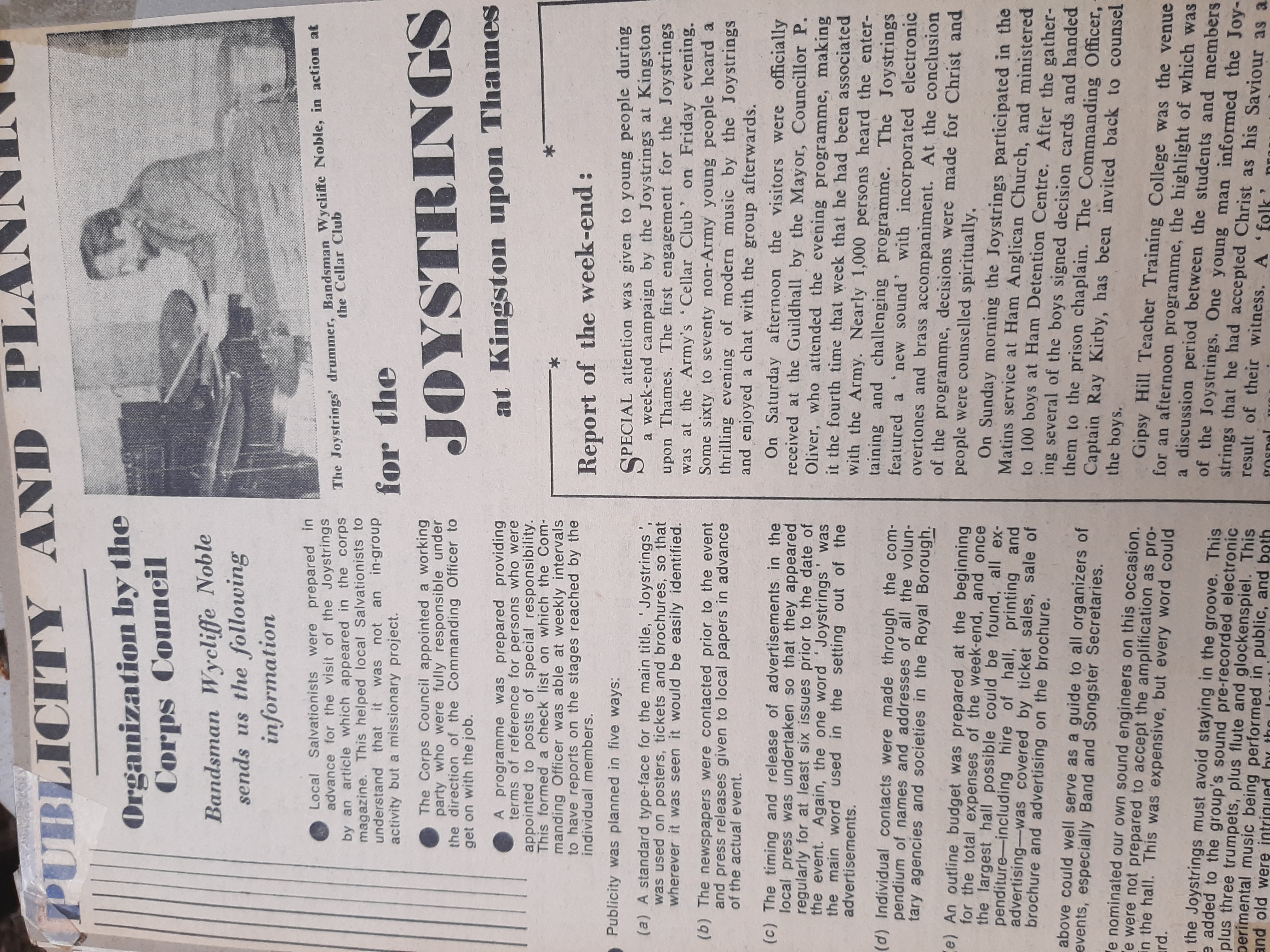
WYCLIFFE THE DRUMMER WYCLIFFE NOBLE is a Salvationist Soldier and
not a full-time officer. An architect by profession and a Fellow of the Royal Order of British Architects, he specialises in the design of buildings for the disabled. He has made numerous radio broadcasts on this subject and has made extensive lecture tours, including as far as Japan. He is interested in modern drumming and has had lessons from Jack Wilson of the Royal Opera House, Covent Garden, London; and later, for modern drumming, from Kenny Clare of Johnny Dankworth's renowned orchestra. With his wife,
Elisabeth, who is a schoolteacher, is a Private at Kingston on Thames Station in London, where he is a Sergeant in the Band.
THE LIAISON OFFICER FOR JOY STRINGS
Major Peter Hawkins was appointed Liaison Officer for the Joy Strings in early 1967 when he took up his duties as Auditor of Accounts at National Headquarters British Territorial. Prior to his appointment he had served in Germany and now accompanies the Group on its many and varied engagements in British Territorial. In April/May 1967 he was their guide on a tour which took them to Sweden, Norway and Denmark.
An interview with the Joy Strings
is
(Continued from page 5)
But none of this can fully explain why the "Joy Strings" can fill a 1,200-seat venue when the night before, big-name pop stars (whose names I could name) had an audience of only 50. "Considering our success, we can only attribute it to God," Joy says. "It's not something we think about, really. We're just busy doing a job. But when we look at
"Looking back at how things were done is very humiliating." And for the future?
"Sometimes we think we can't hold on any longer. I know we all have times when we feel cramped," Peter said. "But then there are the good times when it's really wonderful to have these opportunities to travel, to meet people, and to witness." The three members of the group I met were all
officers of the Salvation Army. "It's the same as being a pastor in any other denomination," Bill explains. "And if one day we decide we don't want to continue the ,,„Joy Strings,“ the Army will give us another job, maybe
be a mission in Britain or abroad". ,,That's the difference between us and any other group
,,pop" Joy points out. "We do it because it is part of a larger work of evangelism to which we have been called."
And right now, many families across the country have been given a new introduction to Christianity by the "Joy Strings" programs on television. The word "Joy Strings" is on everyone's lips. A good advertisement for the Salvation Army and the Christian church, these young people have brought a new life to the Christian faith that has left its mark even on the celebrities with whom they have worked.
JOY
A UNIQUE FESTIVAL
with the group
from JOY STRINGS Tuesday May 7, 1968
at 8 p.m.
Madeleine Hall
25, rue Saint-Jean BRUSSELS 1
CAPTAIN JOY WEBB formed the Joy Strings while on the Salvation Army International Military Academy Staff and led their band for four years. Joy wrote the band's first hit song, "It's an open secret", which went straight to the top of the 1964 charts and toured the world. She is an accomplished composer and a classical pianist and arranger. She also plays the electric organ in the band and her speciality is playing the electric guitar solo in concert hall performances. She is the musical director of the national youth music camps in Britain and leads and arranges for the Sunbury Junior Singers, who recently released a long-playing record in Britain which has achieved national success.
SYLVIA
CAPTAIN MRS DALZIEL is fond of folk music. Some of the songs recorded by the Group are sung and composed by her. Sylvia plays a starring role, alongside Gerard Healey, in the popular television documentary "The Warmongers". She maintains her natural poise when working in front of the TV cameras. She married Captain Peter Dalziel in July 1967 and the marriage was widely covered in the British national press.
PETER
CAPTAIN PETER DALZIEL is the bass guitarist and started playing electric guitar in Australia. He has a particular appreciation for the composition of detailed harmonies and is a rabid "fan" of modern jazz. In addition to the trombone, there are some delightful piano pieces played by Peter on the Joy Strings' long-playing album, Well Seasoned. A subtle artist, he designed the cover of the last Christmas long-playing album. He also collaborated on the lyric part of the very popular song, I won't always be like this" and for which the Group has a weakness under the name of "Emma".
BILL
CAPTAIN BILL DAVIDSON is the lead singer and guitarist; he is a prolific composer of religious protest songs and beat music. Equipped with an electric guitar and harmonica, Bill performs solos in the Donovan/Dylan/Davidson tradition. When the situation calls for it, he can transform his style and bring down the house with a ballad or make beat music burst powerfully in a nightclub with a five-piece electric band. The breadth of his style continues to astonish
other members of the Group.
In addition to his work with the Joy Strings, he worked regularly at the first British Army Clinic.
Salvation for Drug Addicts, located in the Chelsea district of London, is where he learned to understand and love young people.
WYCLIFFE THE DRUMMER WYCLIFFE NOBLE is a Salvationist Soldier and
not a full-time officer. An architect by profession and a Fellow of the Royal Order of British Architects, he specialises in the design of buildings for the disabled. He has made numerous radio broadcasts on this subject and has made extensive lecture tours, including as far as Japan. He is interested in modern drumming and has had lessons from Jack Wilson of the Royal Opera House, Covent Garden, London; and later, for modern drumming, from Kenny Clare of Johnny Dankworth's renowned orchestra. With his wife,
Elisabeth, who is a schoolteacher, is a Private at Kingston on Thames Station in London, where he is a Sergeant in the Band.
THE LIAISON OFFICER FOR JOY STRINGS
Major Peter Hawkins was appointed Liaison Officer for the Joy Strings in early 1967 when he took up his duties as Auditor of Accounts at National Headquarters British Territorial. Prior to his appointment he had served in Germany and now accompanies the Group on its many and varied engagements in British Territorial. In April/May 1967 he was their guide on a tour which took them to Sweden, Norway and Denmark.
An interview with the Joy Strings
is
(Continued from page 5)
But none of this can fully explain why the "Joy Strings" can fill a 1,200-seat venue when the night before, big-name pop stars (whose names I could name) had an audience of only 50. "Considering our success, we can only attribute it to God," Joy says. "It's not something we think about, really. We're just busy doing a job. But when we look at
"Looking back at how things were done is very humiliating." And for the future?
"Sometimes we think we can't hold on any longer. I know we all have times when we feel cramped," Peter said. "But then there are the good times when it's really wonderful to have these opportunities to travel, to meet people, and to witness." The three members of the group I met were all
officers of the Salvation Army. "It's the same as being a pastor in any other denomination," Bill explains. "And if one day we decide we don't want to continue the ,,„Joy Strings,“ the Army will give us another job, maybe
be a mission in Britain or abroad". ,,That's the difference between us and any other group
,,pop" Joy points out. "We do it because it is part of a larger work of evangelism to which we have been called."
And right now, many families across the country have been given a new introduction to Christianity by the "Joy Strings" programs on television. The word "Joy Strings" is on everyone's lips. A good advertisement for the Salvation Army and the Christian church, these young people have brought a new life to the Christian faith that has left its mark even on the celebrities with whom they have worked.
JOY

the joystrings S S WYCLIFFE Wycliffe Noble, the drummer, does not devote all his time to the Salvation Army, not being an Officer. He works in England as an architect, specialising in the drawing up of plans for the physically handicapped. He has had occasion to lecture on this subject all over the world and as far as the Far East. He learned his drumming technique at Covent Garden, the English Opera House, and was later a pupil of Kenny Clare of Johnny Dankworth's training. His wife is a schoolteacher and, like him, a member of the Salvation Army station at Kingston-upon-Thames, near London. JOY Captain Joy Webb was a training officer at the Salvation Army International Officers' Training School in London when she formed the Joystrings in 1964. She has been its director ever since. She composed "It is an open secret" which was a worldwide pop best-seller. Captain Webb, who is a classically trained pianist, has established herself as a talented composer. In the ensemble "Joy. strings", she plays the electric organ herself, but she is not afraid to take on the lead guitar during a concert. She is involved in the Salvation Army's music training for young people throughout Great Britain. BILL Captain Bill Davidson is a solo singer, guitarist and prolific composer of religious songs that testify to his faith. He captivates his audience with his electric guitar and harmonica. Depending on the circumstances, he can change his style and go from romantic sweetness to all-out noise, all in the best tradition of musicians of the "beat" genre. He also takes care of young drug addicts in the clinic that the Salvation Army has opened for them in the Chelsea district of London.

as t, this ration of physical capped plans. He has had the opportunity to lecture on this subject all over the world and as far as the Far East. He learned his drumming technique at Covent Garden, the English Opera House, and was later a pupil of Kenny Clare of Johnny Dankworth's training. His wife is a schoolteacher and, like him, a member of the Salvation Army station in Kingston upon Thames, near London. open se pour personne) which was a world-leading pop record seller. Captain Webb, who has a classical background as a pianist, has established herself as a talented composer. In the ensemble Joy-strings, she plays the electric organ herself, but she is not afraid to take on the lead guitar during a concert. She participates in the musical training of young people at the Salvation Army throughout Great Britain. genre "beat". He also takes care of young drug addicts in the clinic the Salvation Army opened in the Chelsea district of London. PETER Captain Peter Dalziel started out in Australia as a bass guitarist, but he can also play the piano and trombone. Peter is an accomplished artist, capable of designing a record cover as well as composing lyrics. SYLVIA Mrs Sylvia Dalziel, married to Captain Peter Dalziel in July 1967, composes folk songs and sings them with great conviction. She is very much at ease in front of the television cameras which have made her famous in England.

the joystrings Have they gone too far? I have just attended a lesson in "Public Relations" given by the Salvation Army to the Christian Church in this country. The er? The Playboy Club, Park Lane, London. The press was there, with no fewer than twenty-six agencies, plus the BBC and TV; in short, just about everything from the Times to the Daily Mirror. Also there: Miss World and, hold on to your hats, the Bunny Girls. And how charming they were, not only in appearance but in personality! I confess that I went there somewhat indisposed towards this enterprise. It seemed to me that this time the good old Salvation Army was going too far. The Playboys and the Bunny Girls, to me, were like a last resort. The press shared this sentiment, for his questions were very sharp; but the journalists were won over, not by the charm of the Salvationist officers, nor by that of the Bunny Girls, but by the courage of the Salvation Army to stick to its essential aims and methods. General Booth sent his troops in the pubs, the cafes and the taverns. General Coutts sends them to the clubs. The hosts of these places are always the same, except that today they present themselves to us under a veneer of elegance and luxury. The purpose of this press conference; to launch Salvationist Week. If a child from the West End can go on holiday to the Balearics and another, living a few miles further East, is on the verge of starvation, then something is wrong with our England of 1967 (*). All who have been involved in the preparation of this effort have done so prayerfully and well. The banks, the oil companies, the clubs and hotels have been involved. Every single person in the Salvation Army has been mobilized. This is the most revolutionary thing that has come from the Salvationists since the days of William Booth. While large sections of the Christian Church are absorbed in discussions and committee meetings, these people are campaigning, working and sweat to pass the march- says. It is about moving forward on the ground still left fallow by the welfare state, to help those whom our Social Security does not touch. And we go there not with bread only, but also with the Gospel. Three nights in a row, the Joystrings, a modern Salvationist ensemble, sang at the Playboys cabaret; their productions were all centered on the Gospel. God was there, in the midst of these people tasting caviar and champagne. Strange, but it recalls certain scenes from the New Testament. The criticisms raised today by religious people seem to be also an echo of those uttered in the past to men, and especially to Man, of the New Testament. Before we disapprove, let's be careful. The Army of Paris-Central 42, rue de Provence (9°) (Opéra and Chaussée-d'Antin metro) Salut certainly goes to places where people have shocking attitudes, a conception of life that seems to differ greatly from established principles; but at least it goes where the world is, where the crowd goes... We cannot say as much of all Christians. Be angry if you like, but I believe I hear an old General approving and even exulting! Rev. John Lambert of the BBC (London) (*) This article was written last year at the time when, in England, the Am du Salut launched a special collection for people in need, glues In which the Joystrins participated P.T.O. "Let's go" 4/5/68 MORNING Sunday May 5 at 3 p.m. under the chairmanship of the Head of Territory assisted by Mrs ABADIE and “Joystrings >>> Morning of Sunday May 12 at 3 p.m. chaired by Brigadier ESCANDE with the posts of the Bastille and the Palais du Peuple


UNIQUE FESTIVAL
in Brussels
Tuesday 7 May 1968
at 8 p.m.
Madeleine Hall Entrance 25 rue Saint-Jean
Cordial invitation Participation fee: 20 F
(Continued from the first page)
Hello?" Now, at the International Officers' Training College, experiments had been made with modern music designed to attract teenagers to youth meetings. Captain Joy Webb, an instructor officer at the College, was therefore asked to try to do something with a group of "Cadets", with a view to satisfying the desire of journalists anxious for documentation. Their photograph was widely distributed by the English press, as well as by radio and television. The result was
Great Britain. The Company suggested that the group adopt a name, and that of Joy Strings" was finally chosen: the Joy Strings (Joy, from the first name of Captain Webb, leader of the group, which means joy", and Strings, in other words, strings", an obvious allusion to the musical instruments used).
Before attention had dulled,
VOX
early hours of the morning. They were listened to with sustained attention, and they discovered in their listeners a genuine, almost pathetic, interest in the spiritual values ??to which their songs referred.
During their three-year existence, the Joy Strings have improved their technique considerably; for example, the instruments are now electrically equipped; however, the themes of their songs have remained, reaching thousands of people detached from any religious practice. Frequent appearances on television programmes, on radio, and the constant production of records, have made the Joy Strings a household name in Britain.
At the end of their internship as “Ca-
The "Joy Strings" performing their songs in front of a large audience.
a big controversy in the newspapers.
A British company, C.M.I., offered the group to release "a record intended for sale on the "pop" market. The song, "It's No Secret", written by Captain Webb is based on a text from the New Testament and was a surprising success. Even today, it is one of the most requested records in
An unexpected invitation to the Joy Strings put them back in the press: the owner of the "Blue Angel", a famous nightclub in a chic London district, heard Captain Webb say on television that the Joy Strings' ambition was to make her message heard in nightclubs. Invited to perform at the "Blue Angel", the Joy Strings sang there three times at the first
dets", the Joy Strings, together with Captain Webb, were assigned to administrative posts at the International Headquarters in London, which enabled them to undertake numerous campaigns in various regions. They travel in their own specially equipped vehicle. They have performed in cathedrals, prison chapels, and in the theatres and largest halls of England, always to packed houses. Their obvious sincerity has changed the opinion of equally sincere critics who considered this type of music unacceptable for evangelism. Outrageously loud at first, and delivered to an ultra-modern rhythm, their music gradually becomes quieter and leads the listeners into a moment of spiritual recollection. It is rare that at the end of an evening with the Joy Strings, when the call to conversion is made, young people do not respond publicly "We are speaking to young people," Captain Joy Webb readily asserts; "older critics should remember that."

Man has time
Man has time to fear and hate
He has some
Too late perhaps, He will want to chorus for the war
des Joy Strings
Sir Time for the good he wants to do The man of time
With the group
14 Time to waste in vain, But there is none for God
OF THE
CHANTS
to go anywhere Wear a glove the man has to
NEWS
Man has time To fear and hate He has time for war Too late perhaps, He will want to choose Time for the good That he wants to do.
REFRAIN
Man has time To go everywhere To carry his vain glory
The Joy Strings, a famous international group, have won the hearts of the masses through their singing and spontaneity, as their efforts are aimed at making religion lively and joyful. Since their inception in November 1963, the Joy Strings have had the opportunity to travel to Great Britain, Holland, France and Scandinavia to give concerts of music and songs, often in the languages ??of those countries. They have appeared on Dutch, French, Norwegian and Swedish television. They have appeared on American and Canadian colour television. In Germany, Italy and even in Ceylon, Rhodesia and Australia, the press has mentioned this Salvationist group and film news has introduced it to the public.
The Joy Strings had the joy of working with internationally renowned artists.
I want to sing it I want to shout it I want to tell you
About him:
The love of Jesus
The love of Jesus.
He brings me joy
In the heart
Joy in the heart.
Man has time to waste in vain,
But he has none for his God.
It's a time to laugh and sing
And to shed tears
But we can never redeem
A life wasted.
In 1967 they had the great honour of being presented to Her Majesty Queen Elizabeth at Buckingham Palace. The Queen took a keen interest in their work. At an ecumenical service in November they performed in the presence of Queen Elizabeth, the Queen Mother and representatives of the Greek Orthodox, Armenian, Roman Catholic, Lutheran and Jewish churches.
On the occasion of the 900th anniversary of Westminster Abbey, they played with the popular artist Julie Felix, making them the first rhythmic music group to be heard in this religious building.
The Joy Strings are now regulars on the popular religious programme 'Song Break' every Sunday afternoon on British TV; for eighteen consecutive weeks they were on the small screen.
The love of Jesus
REFRAIN:
I want to sing it
I want to shout it
He brings me joy
In the heart.
"Guesse's Cry
27/4/68
Music
composed
by the Captain
Joy WEBB
Far from being limited to cathedrals and concert halls in Europe, the Joy Strings continue their activity in hospitals, visiting prisons and penitentiary centres. They are also in great demand by London schools to participate in religious instruction classes.
In the dazzling world of artists, so solitary behind the curtain of the Show, the Joy Strings are no longer unknown. After their production, once back in their dressing rooms, artists, cameramen, members of the staff come to tell them stories full of hope and fear. The salvationists listen to them willingly and they try to help them. bring them the comfort of
would so much like others to share it. They speak discreetly of their faith and it is there that the Joy Strings accomplish most willingly in the world.
How to say it
And describe it
Will I finally be able to
Instruct you in the love of Jesus, the love of Jesus. It gives me joy
In the heart
Joy in the heart.

THE JOYSTRINGS IN BRUSSELS
Tuesday May 7
In recent years, the Joystrings have reached thousands of young people with their singing and music. They could regularly be heard on radio and TV. But not only there, they could also be found on the streets and beaches, in halls, cafes, theaters, factory canteens, holiday camps and nightclubs, singing and speaking of the joyful truth that they belong to Jesus.
"If we want to approach the young people and that entire middle class of the population who listens to nothing but the rhythm of the beat, we must speak to them in their own language, this is the only way to make contact." with them," said Captain Joy Webb.
Make sure you see them, because immediately after their visit to Belgium and the Netherlands, this group will cease to exist and they will only be available on black discs.
To clarify once again why the Joystrings are concerned, we will let Captain Joy Webb speak again: “After a performance by the Joystrings on the sidewalks of St. Paul's Cathedral, a young Salvationist returned to his return to the office in the company of a non-Christian colleague. When he asked what he thought of the Joystrings, the answer was: “They are fantastic. But there's more to it, isn't it? You listen to them and you think, "It's great," but then after a while you suddenly wonder, "Who are they actually singing about?" And that makes you think." Isn't that exactly what we want. To make people think? We don't just want approval, nor just support and appreciation. We want people to think about themselves, about the world and about God ".
We hope that the visit of the Joystrings to our country will be a success, especially a success in spiritual development.
view!

A9 le g
VOX
the JOYSTRINGS in Brussels
?
The Joystrings in action for an enthusiastic audience.
and in all other places where they are to be found.”
Where do those guitar groups come from?" was the immediate reaction from the press, radio and television?
As it happened, the international training college in London, where young people receive their training to become salvation officers, had been experimenting with "pop" music for some time. Captain Joy Webb, a member of the training team , had formed a group with a number of cadets that sang songs in a style tailor-made for young people.
The press came to them and in the shortest possible time their photos appeared in all English magazines and radio and T.V. the rest. It was a discovery that this kind of music was considered proprietary to the Beatles, Rolling
THE
It started in November 1963. The newly elected international Salvation Army leader, General Frederick Coutts gave his first press conference. He said the Army was planning to add a new weapon to its already formidable musical arsenal. It would become the perfect guitar so that the message of the gospel could be presented even more effectively.
ven casi "We believe," he continued, "that the truth of the gospel is unchangeable, but it must be presented in words that can be understood. We must not forget to go to the people , if they refuse to come to church or Army Hall for whatever reason. I think especially of our young people. We have to go to them - visit them in coffee bars, dance halls
A SINGLE EVENING IN BRUSSELS!
Tuesday May 7, 1968
8 p.m
Magdalena Hall Entrance Sint-Janstraat 25
Everyone is welcome. Contribution to expenses: 20 francs
Stones, etc. - could be used in preaching the Gospel. Or actually it wasn't that new after all, because William Booth already said, all music belongs to God - the devil stole it from Him. Therefore, let us use all music to glorify God! The first album, It's an audience
secret" became an astonishing one
success. The text, written by the
musical captain Joy Webb has been
based on a statement by Paul: "Our love for Christ is known to all of you." The gramophone record company asked if a name could be given to the group and so "Joystrings" was added to the Army vocabulary.
added.
Just when the publicity was starting to wane, an unexpected invitation brought them back to the front page news. The owner of the famous London nightclub "De Blauwe Engel" in the West End entertainment center saw the Joystrings on TV and heard Captain Joy Webb say that they would like to play in dance halls, clubs, etc.
The 1,000 guilder fee was refused, but they performed three times in the nightclub. The visitors were delighted and listened to the songs with deep attention. They understood that this was more than exciting rhythm. It was music with a message that you could think about again.


hr
Sla
But
D
ior
of
Shared
A lot
A
one
whe
Courage
Cro
What
Sisti
Other
Arm
"The Krigorate"
25/5/68- 7/6/68
40
HE
IVA
20
CRY
OU
They are
7
BETWEEN
be
they are
The Salvation Army's world-famous "pop group" has set minds and thoughts in motion with their songs and music. Wherever the group has sung and played, people have been seized by the message, and many have been won to Christ. Their records can still be purchased at Salvation Army Army Commercial Department, Frederiksberg Allé 9, 1820 Copenhagen V.
IN
We recommend:
IC
RZ 501
We are going to set the world It's an open secret
RZ 504
A starry night Now I know
DKK 10.00
DKK 10.00
ORE 8285
The trumpet of the Lord When Jesus comes to you Walk in the light Yes, indeed
ORE 8261
Lord, on our side Time Love that's in my heart Without him
DKK 17.00
DKK 17.00
ORE 8258
Have faith in God There was a man I want to sing it Fellow
EP 47
Tomorrow Everything This is living It won't always be like this
DKK 17.00
In addition, the large record with 16 different songs: LRZ 4016 for DKK 39.00.
DKK 17.00

